by
by The rise of authenticity and more connection to brands is a major trend in today’s content marketing landscape. Users are now more likely to trust real customers, rather than created messages by companies. As a result, user-generated Content is having a large influence.
User-generated content gives you the ability to create and promote real-life experiences from users instead of promoting perfectly polished promises.
Changing Consumer Trust and the Shift Toward UGC
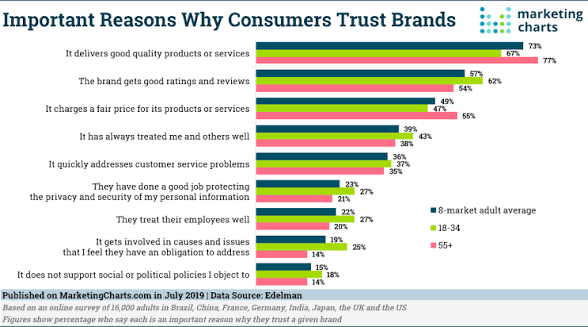
Changes in Consumer Trust Levels Regarding Brand-Produced Content are driving Content Marketers to develop Strategies that Leverage UGC (User Generated Content) To Foster & Build Trust with Today’s Audience.
Research Conducted By Nielsen Consistently Supports The Concept That Consumers Trust Other Consumers’ Recommendations Over The Brand’s Advertising Message. As A Result Of This Change In Trust Level Between Consumers and Brands, Marketers Are Changing How They Communicate Value to Consumers.
Additionally, consumers now have higher expectations for Transparency, as well as Proof of Product Effectiveness, when considering engaging with Brands. Also, Reviews and Testimonials, as well as User Generated Content, create Lower levels of Skepticism in comparison to Traditional Promotional Messaging.
The User-Created Content Environment Also Favors Consumers’ Honest Product Experiences over Highly Produced Marketing Messages.
As The Trust Level Between Brand, With The Associated Emotional Connection; Thus, Encouraging Participation and Loyalty, Leads Into The Shifting of Strategy by Brands.
Increasing Content Marketing Performance With Social Proof

User Generated Content Represents Social Proof. User generated content serves as social proof, lending content marketing additional credibility.
Having a positive product experience from someone else increases their level of reassurance. Therefore, internet retailers such as Amazon place a great deal of weight on user reviews since user reviews directly correlate to product sales performance.
Real and actual images or videos of products provide a second level of confidence in the purchasing process for customers. As more and more customers receive social proof of a brand or product’s quality, confidence in brands and products increases, which ultimately leads to increased conversion and sales from online campaigns.
Social Proof in Digital Marketing Technology (dMT)

Current social proof efforts in digital marketing technology (dMT) are primarily comprised of user generated content (UGC). To facilitate this, brands create hashtag challenges or build upon reviews from their customers. The result of UGC is a consistent source of unique content from authentic customers.
From the perspective of the marketer and the brand, as long as someone has posted a piece of content (e.g., image or video) containing information about your brand, that person has effectively “spread” your brand’s information to his/her network.
From an advertiser’s perspective, the organic reach of the content being shared dramatically reduces the cost of advertising for the brand.
Marketers also utilize customer-created content across all marketing platforms including paid media, owned media, and social media. The ability to repurpose UGC for your own use will help maintain the authenticity of the UGC over the life of the campaign.
Building Engagement Across Campaign Touchpoints

When consumers are able to witness and participate in multiple campaign stages, the result is heightened levels of consumer engagement between campaigns.
Social proof can enhance brand credibility, creating a link to your overall marketing strategy to grow the level of consumer engagement within each touchpoint of the campaign.
User Generated Content Promotes the Growth of Engagement in Content Marketing.
This community momentum naturally leads into a campaign-focused strategy.
How to Measure Engagement Effectively

Marketers have begun measuring engagement metrics specifically for User Generated Content (UGC) and how well it performs. Likes, Shares, Comments and Saves are all ways of gathering feedback from users to see what they value. This information allows marketers to make better informed decisions about future content marketing strategies.
Brands can use the metrics of UGC Engagement to benchmark against Brand Content Engagement to help inform what types of strategies to use. In many instances UGC will out perform Brand Content. This has allowed Brands to allocate their budgets to the UGC community drive approach.
The insights gained through engagement measurement allows for an easier transition to larger campaigns.
UGC as a Credibility and Emotional Connection Builder

The use of UGC to further enhance the credibility of content marketing campaigns is becoming more popular. UGC creates a personal component that provides an emotional connection a human element to a marketing campaign.
This creates less scepticism and encourages increased consumer interaction by making campaigns feel less promotional, and more like a part of their community.
Organic Promotion and Efficiency Through User-Generated Content

This has resulted in a great deal of organic promotion.
Marketers have also been able to lower their production demands because they are receiving creative assets from consumers.
It allows for better efficiency in marketing campaigns while helping marketers to support longer-term content strategies.
Leveraging the power of social proof is a proven strategy for growth for successful organizations.
In addition to GoPro, there are many brands that generate marketing content from their customers’ Content. Customer-generated content is an effective way to convey the value of your product to the target audience because the consumers themselves convey the message in a clear way and therefore establish an increased level of trust based on the fact that the experiences were shared.
Over time, a consistent campaign strategy creates an established level of trust for your brand within your target audience. When the campaign utilizes user-generated, driven messaging, the target audience will have established the campaign and the brand through a recognizable platform, which creates familiarity with the messages within the campaign.
Familiarity creates increased levels of confidence in the brand and higher recall of campaign messages.
As the impact of a successful campaign increases, both user participation and audience loyalty grow. User participation will become a fundamental part of the strategy to increase user growth over the long term.
The Emotional Connection of User-Generated Content in Building Brand Loyalty through Content Marketing

Content marketing can be made more powerful through the emotional connections between users and brands created through the use of user-generated content (UGC).
When customers see themselves in the UGC, customers feel valued and appreciated by the brand.
Loyalty to brands becomes an emotional choice when this happens.
Apple is a great example of a company that has become a brand advocate because they were authentic in their approach to marketing.
Many loyal Apple customers will share their Apple experience without any incentives. By doing this, they reinforce the level of trust that exists within their own communities, and support emotional loyalty to a brand, which is necessary for long-term growth.
As loyalty grows, customers naturally defend and promote the brands that they are loyal to. Their advocacy goes beyond the company’s paid channels, and opens the door for building community strategies around brand loyalty.
Strategies for Constructing Brand Communities and Building Relationships through User Generated Content (UGC)

Developing a Targeted Brand Community through UGC
UGC enables content marketing to develop brand communities that are engaged, active and growing rapidly.
Reddit and Facebook Groups allow users to share UGC-based content with each other. Consumers are able to share ideas/tips/feedback with one another through open conversations.
Brand’s consumers can trust each other, and thus, can provide valuable input to the brands.
Building credibility means having open, honest answers to questions. Trust is a key component of community health.
When communities have strong trust, it naturally creates an environment where members want to advocate for the brands they like.
Members will actively refer people to the brands based on the close ties of how they feel about the brand. These referrals turn into the way community members refer people to brands; by way of example and with confidence.
The Impact of User Generated Content Over Time

User generated content continues to have an impact on consumer purchasing habits long after the campaign has ended.
Archived reviews, comments and articles created by users are available for consumers to read. This means that the faith in the user is continually being built up over time as well.
Before making a purchasing decision, most consumers conduct research on the brand. The ability to view the support continued after the sale provides a level of comfort for consumers’ final decision.
There is no expiration date for social proof.
As a long term asset, user generated content provides unlimited opportunities to grow as a business. Brands invest time and money into their consumers, and create a good foundation for developing future plans.
Marketers may also find that UGC outperforms branded content with regard to click-through rates and time spent on pages. The greater the interaction with UGC, the more significant the audience’s interest is in that content.
Measuring Performance, Cost Efficiency, and ROI of UGC

The increased ability to understand how to use UGC gives marketers the confidence to optimize their strategies. The ability to make data-driven changes has increased the efficiency of UGC campaigns.
The focus on measuring success now puts marketers in a position to scale their efforts.
Cost vs Value Comparison
UGC is typically less expensive than producing branded content for many marketing teams. Customers create and provide the creative assets, which also results in lower costs, while ensuring high-quality deliverables for clients.
Therefore, the value of UGC increases significantly, thus creating a situation where less money is being spent on advertising and more money is being spent on UGC.
Brands often find UGC to be more engaging than traditional advertising and thus, will find it to be a cost-effective way to increase the predictability of ROI.
Finally, brands will find that long-term value will remain present with UGC. Unlike other forms of creative assets that may have a shorter period of value, user content will continue to be valuable for an extended period of time.
The Role of Technology and Platforms in the Evolution of UGC

Platforms such as YouTube are increasing the available monetisation and community features for creators.
Using User Generated Content Ethically

Getting Consent from Users & Being Transparent with Users
Using ethical practices helps with building relationships.
Through acts of fairness, trust will grow.
Maintaining a good balance of trust between the company and their user is essential for the customer to return to make further purchases.
When reviewing content from users, it should be moderated only to ensure safety, not to manipulate the user.
Feedback from users will be more beneficial to the company’s overall image than bad feedback from unhappy customers.
Users enjoy being able to communicate openly with a brand, and therefore will appreciate it if they can speak freely to a brand.
A company’s to build and maintain their brand reputation will be greatly enhanced by following ethical guidelines; therefore, they will earn trust from their customers.
Finding the right ethical balance will lead into the conclusion of the article.