by
by In 2026, social media marketing continues to grow and change quickly as new social media platforms, users and algorithms will be added every year, allowing small businesses greater visibility and ability to compete through their online presence.
Small businesses will have to adapt to the changing marketplace by establishing a well thought-out plan and using consistent creative efforts against their competitors, with or without large advertising spends or campaigns.
Growth of Short-Form and Interactive Content

The continued growth in short-form as well as interactive content in the social media space is happening all over again. The rise of these two types of content will continue growing exponentially over the coming years.
In particular, platforms like Instagram and YouTube have taken the lead on short-form video content as compared to traditional style posting; therefore, short-form video content will remain a beneficial content creation option for business owners who create simple/short product videos and, ultimately, increase their businesses’ interaction rates.
Interactive Content and Brand Engagement

Interactive content is a great way for people to interact with businesses and build brand recognition by engaging with them through interactive formats.
Since users are more likely to look for quick information; therefore, participation through polls, quizzes, and question stickers are very popular ways in which to engage with brands.
Community Trust and Visual Consistency in 2026

Social media marketing in 2026 heavily relies upon community trust.
As opposed to placing heavy emphasis on the number of posts made on a platform in 2026, business owners should focus more heavily on the consistent establishment of visual currencies.
Setting Clear and Achievable Marketing Goals

Attempting to accomplish too much at once typically reduces the overall effectiveness of their efforts, while focusing on fewer, simplified goals makes tracking results much easier, and thus provides an opportunity for success in creating content and developing a consistent presence for their small business online over time.
Selecting What’s Right For Your Audience

When small business owners select stronger social media marketing platforms, they will always continue to develop and enhance their brand presence in the marketplace.
Building a Consistent Brand Voice

Social Media Marketing is a great way for small business owners to develop a consistent Brand Voice.
A Brand Voice provides Customers with an easy and consistent way to identify and recognise a Brand across multiple platforms. When brands are easily recognised, Customers have more Trust in that Brand, which ultimately results in more Customer engagement.
Having a recognised Brand Voice separates a Business from its competitors. People relate and engage with a Business when they instantly know, through imagery, Fonts, Colour Schemes, and Messaging, what the Brand is all about.
Brand Awareness is built quickly when Customers feel that the Brand’s Communications are consistent.
Visual Branding and Graphic Style Consistency

Branding should be visualised as Graphic and Content Style, and therefore require similar image, Graphic, and Font Styles to be used consistently to develop an Online Presence that is familiar to the Customer.
A Brand’s Graphic and Content Style does not have to be overly elaborate or complicated. Even very simple Graphic Styles can be effective when used consistently.
Having Consistency does not mean that a Business needs to have access to an expensive Graphic Designer or Custom Graphic Software. There are many free online services available today, such as Canva, that have made it easy for Businesses to develop and maintain their Brand Style.
By planning the Visual Style of your Brand early, you allow for the creation and focus of your Business’s content development, subsequently making Online Marketing easier.
Repetition Without Overposting

Repetition without Overposting.
Repetition reinforces Brand Recall, and therefore a small business should use multiple Formats of similar messaging and communication.
Using Customer Feedback to Drive Content Ideas

When a small business closely monitors its customers’ feedback (questions or comments) often, it will often help it create content that answers these questions, which builds trust between the business and the audience long-term, thus increasing its online presence organically.
When a business monitors what its customers say via comments and messages on social media, this information will provide several different opportunities for ideas for its content.
When businesses create content based on customer needs, it helps to provide their audiences with relevant material, and therefore businesses can gain credibility over time as the audience views them as a resource.
Content Format in 2026

Although video, store front (carouse) and short-form content continues to gain popularity in 2026, their formats work extremely well for audiences using mobile devices.
Small businesses can test out these formats and use this information to help guide their strategy for consistency in posting throughout the year.
Posting Frequency and Timing for Small Business Social Media Success

A Good Posting Timeline will Produce Less Stress and Greater Organization for Small Businesses.
Instead of being necessary for success of Social Media Marketing, small business will be provided by well-planned posting timelines and schedules.
Generally, it is best practice to post 3–4 times a week rather than posting every day. Although posting every day may produce higher volumes of posts, consistent timing will provide better success for your business.
As a small business owner, you need to test different posting times until you find the best posting time for your specific User Base using platform insight/analytics.
Monthly data review of your page via Facebook or Instagram will help you maximise engagement from your social media marketing efforts.
These constant adjustments provide the foundation for you to build more effective strategies focused upon your audience’s behaviours each time you create and promote new content.
Increased Posting Frequency Decreases Engagement Potential

When posts are done at a higher frequency than required for your audience’s engagement level, you run the risk of having your users ignore most of the notifications related to your posts. Therefore, as a small business, you must focus on the relevance of what you create as opposed to the quantity of what you create in terms of quality and relevance. Quality posts will always generate more engagement than quantity.
Using Paid Social Media Marketing Wisely on a Small Business Budget
Paid Social Media Advertising in 2026
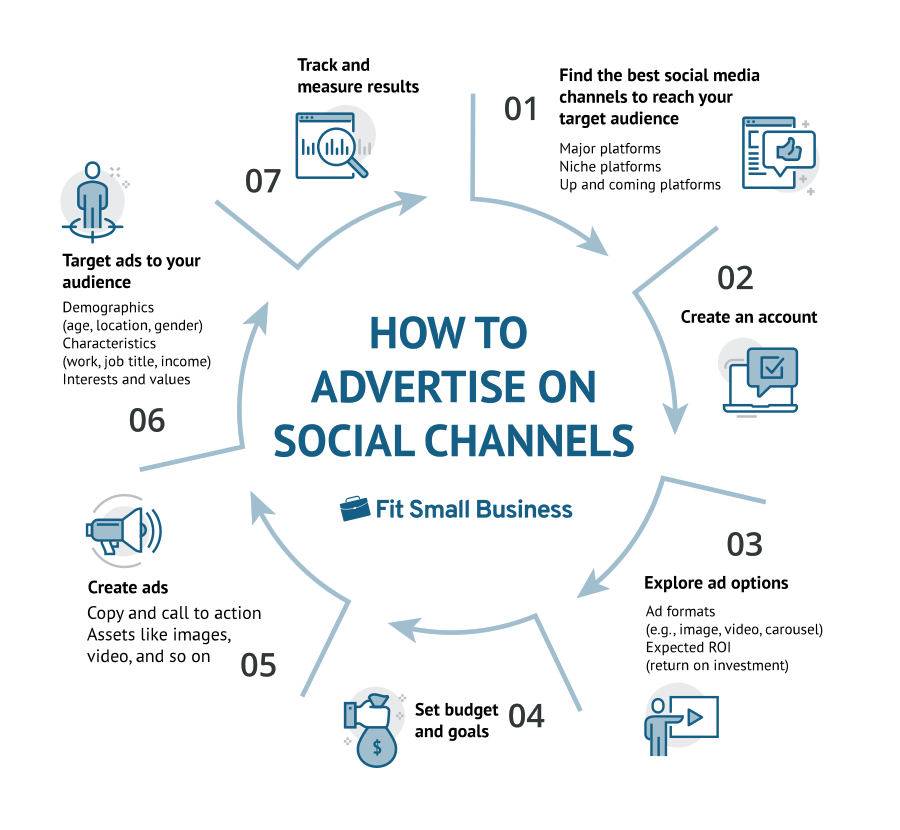
Due to decreasing organic reach across major platforms, small businesses may experience an increase in their consumer base when using paid support. A small budget can still enable the right audience to engage with your organisation’s content, and using paid advertisements creates a greater brand awareness in a shorter amount of time.
Paid advertising allows for a higher return on investment through its precise targeting capabilities (i.e., location- based targeting and interest-based targeting). With these capabilities, paid social media marketing will provide a consistent growth in revenue.
When creating a paid advertisement, small businesses must determine a primary single objective. Examples of ad objectives include website visits and lead generation. Having a clear objective allows for the ability to analyse the effectiveness of a paid advertising campaign, therefore preventing wasteful spending.
Influencer Communities and Campaign Measurement

These individuals build loyal communities on social networks.
Tracking Influencer Campaign Performance
Monitoring the performance of a small business influencer campaign enables businesses to better their chances of having future successful campaigns. Businesses should monitor site visits and interaction with their marketing via their influence partners and a tracking link is the easiest method to this end. The results from monitoring campaigns will ultimately provide better direction for the business going forward.
Improving Online Presence Through Engagement and Community Building
Replying to Posts and Inquiries

By responding to people, the chances of your platform being visible increases. Social Media Algorithms rank higher for companies with High Engagement. Using engagement to build your Online Presence will increase dramatically over time.
Social Media Marketing Success – The Power of Two-Way Conversations

Two-Way Conversations Provide Interaction
Polls and Questions are a great way to engage your customers about their preferences. As a result, you will learn what type of content to provide to them.
As a result, Social Media Marketing becomes much more personal.
Social Media Marketing Success – User-Generated Content

When a customer shares a positive review or photo it creates a significant amount of credibility for that business. Small businesses have the opportunity to re-share testimonials and images from their customers. This is one of the best ways to build Social Proof and establish Trust with customers.
Using Analytics and Data to Improve Social Media Marketing Results
Data is Important to Small Businesses

Using data as a guide to improve social media marketing is important for small businesses. By analysing data, businesses can identify what types of content work well and what types don’t, which will reduce guesswork and save time as well as improving the business’s visibility through Data utilizing Social Media Platforms like Meta and Instagram, Small businesses will have clarity without incurring additional costs; therefore better educated decisions will allow them to enhance their online presence.
Metrics to Track for Small Businesses

Not all metrics are equally important for small businesses when it comes to social media marketing; however, there are specific metrics that are vital. The Meaningful Metrics listed below correlate directly with growth and interest of Your Audience.
There are many useful Metrics Small Businesses Should Measure:
-
Engagement Rate – Measures the interaction of Users with content.
-
Reach – Measures how many users viewed the posts.
-
Profile Visits – Measures how curious users are regarding a Brand.
Tracking these Metrics on a Monthly Basis will assist businesses to develop More Effective Tips, to be More Successful when Planning and Creating Content.
Turning Data into Actionable Steps

Data should be utilised to develop plans for improvements. Businesses should Retain what worked and do Again, write off what did not work, and Proceed to Develop new Automated Marketing Strategies based on Installation of the Data Derived from their social media accounts.
Automating Social Media Marketing Without Losing Authenticity
Automation Tools Offer Many Advantages

This results in a more consistent posting schedule than if planned out manually.
By remaining active – even just because they are posting let others know they exist – small businesses also strengthen their online presence.
The Dangers of Excessive Use of Automation

Too much use of automation can result in a robotic feel to your brand. For example, if your small business uses automated replies in every instance, your community may feel disenchanted.
By maintaining flexibility as a company during these continuously evolving times will eliminate an immediate decline in performance. Also, by being aware of how a company is using the social media platform(s) takes the guess work out of knowing if the way in which a company is using it exists in a manner that consistently provides results.
One way to get a better understanding of the changes being implemented by social media platforms is to read the changes that the platforms publish on a regular basis and to also follow the changes being implemented by social media creators. A business can try out and start using new features of the social media platform slowly to limit the risk associated with the changes being made and also stay abreast of new features before everyone else does. By being flexible will give you an advantage over other companies who may have to completely change their marketing plan after seeing how and when the changes are implemented on the social media platforms.
Building Skills and Planning for Long-Term Sustainable Growth
Therefore, improving one’s skills results in better overall performance of the company now and in the future.
Having a plan for the long-term and sustainable growth of your business is critical. A business that fails to plan for its long-term success will result in the employee(s) experiencing burnout. Burnout ultimately results in a loss of morale and therefore, minimizes their potential productivity. As a business grows and expands, it will put additional stresses on employees.
Therefore, businesses need to have plans in place for their employee(s) to meet the demands of their ever-growing business while also providing employees with similar opportunities to achieve a successful work-life balance. By setting and committing to realistic goals, your business will continue to provide its customer with a consistent product consistent to real customer need attainment, which is consistent with your business’s branding.